65 → 88
Reached treatment per 100 identified
Strongest TMS candidate tier; stated as before OutcomesAI and with OutcomesAI live.
How the model works
OutcomesAI combines artificial intelligence, deterministic clinical logic, and workflow integration so relevant evidence can be reviewed consistently without moving decision authority away from clinicians.
Artificial intelligence
AI is used to identify, extract, classify, and structure clinical evidence. Every structured clinical finding can be traced to supporting source documentation.
Deterministic logic
The rules layer is designed to apply physician-defined deterministic scoring, qualification, and safety criteria. The scoring model uses physician-defined deterministic rules.
Clinical authority
Clinicians review evidence and retain final authority over treatment decisions. The platform does not make autonomous treatment decisions.
AI structures the evidence. Physicians define the clinical criteria. Clinicians remain responsible for the treatment decision.
This separation is designed to make clinical intelligence explainable and reproducible while keeping clinicians at the center of care.
Explore Clinical Opportunity Intelligence →Connected workflow
Identifying an opportunity has limited value unless a healthcare organization can review it, reach the patient, coordinate care, and follow through.
OutcomesAI serves as the intelligence layer between existing clinical evidence and action.
The electronic health record remains the source of truth while OutcomesAI serves as an intelligence layer between existing clinical evidence and action. It works alongside existing systems rather than replacing them.
Review the clinical methodology →Production evidence
OutcomesAI’s first production application focuses on TMS candidate identification for treatment-resistant depression. It is deployed across a 12-office Interventional psychiatry network with more than 6,000 new-patient evaluations annually.
65 → 88
Strongest TMS candidate tier; stated as before OutcomesAI and with OutcomesAI live.
+23
Observed in the production deployment for the strongest-candidate tier.
10 → 5 days
H2 2024 compared with Q1 2026.
Most
A care-delivery measure from the production deployment, not a claim of clinical efficacy.
These are measured care-delivery and operational results from the production deployment. They do not claim clinical remission, treatment efficacy, causation, statistical significance, or return on investment.
Clinical intelligence can help healthcare organizations turn information they already possess into measurable improvements in care delivery.
Governed by design
Healthcare intelligence must be transparent, governed, and clinically accountable.
Core security controls include encryption, role-based access controls, secure apis, and auditing.
Explore security and data ethics →These principles are part of the architecture of the platform, not an afterthought.
Beyond the first application
TMS is the first production application, not the limit of the platform. Important treatment opportunities can remain hidden when eligibility depends on longitudinal evidence such as previous treatments, failed therapies, symptoms, laboratory values, diagnoses, outcomes, contraindications, and other clinical evidence.
The long-term vision is a scalable Clinical Opportunity Intelligence layer capable of helping healthcare organizations recognize important treatment opportunities across specialties, treatments, and patient populations.
Critical clinical information should not remain buried simply because healthcare systems cannot consistently connect evidence to action.
Company
OutcomesAI is operated by Cloud Raiders Inc..
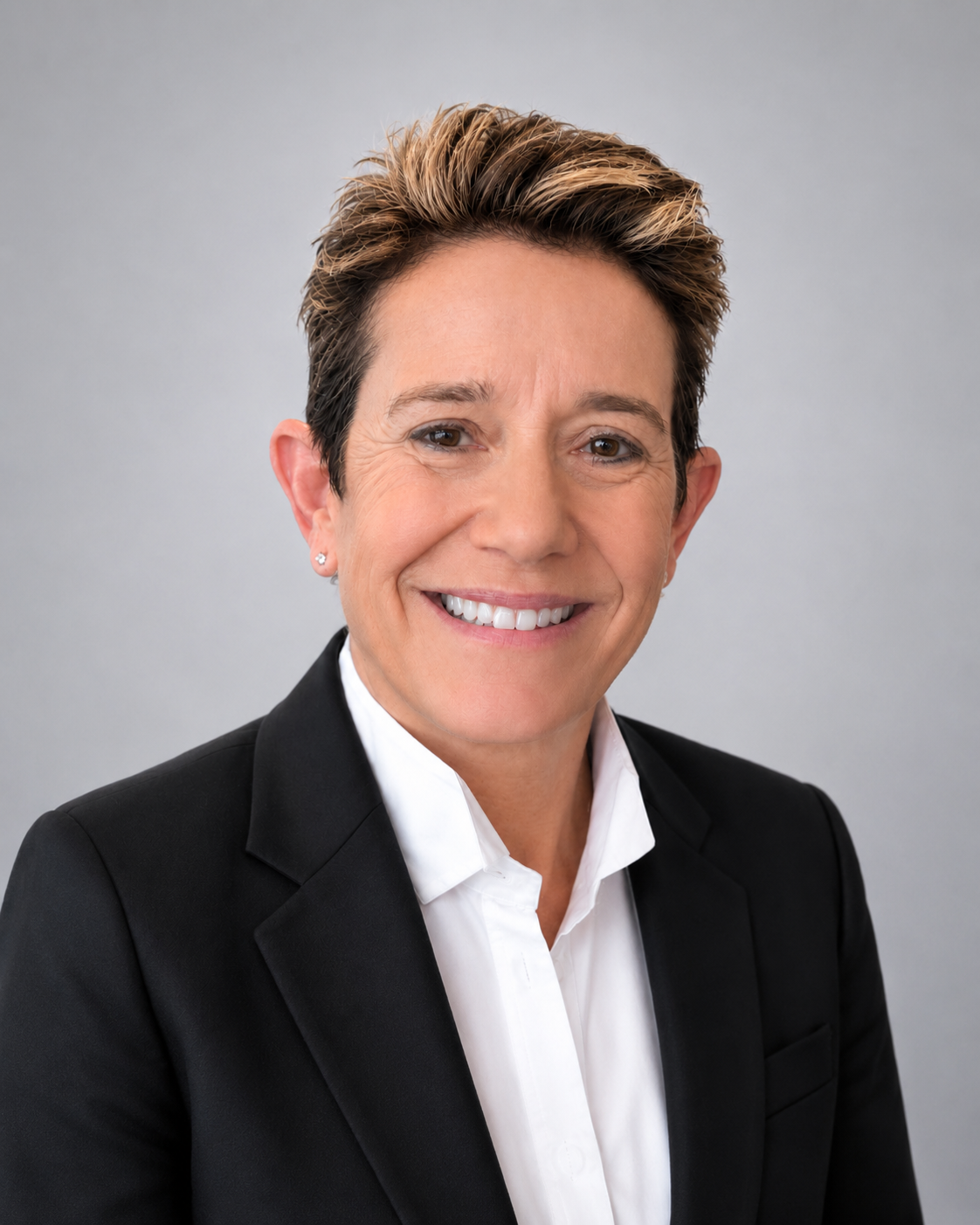
Leadership
Founder & CEO
Laure Linn is the Founder and CEO of OutcomesAI. She brings experience across healthcare technology, analytics, revenue-cycle operations, AI product development, and implementation. She leads OutcomesAI's strategy and development of Clinical Opportunity Intelligence technology designed to help healthcare organizations turn fragmented clinical evidence into actionable treatment opportunities.
Contact OutcomesAI